
Bad Bunny’s Super Bowl LX halftime show faced tight NFL rules and big risks, but it still reached more than 128 million viewers and became one of the most-watched halftime shows ever.
In a recent interview with Variety, director Hamish Hamilton and creative director Harriet Cuddeford described how NFL restrictions shaped many of the show’s creative decisions and raised the stakes for the live production.
According to the show’s producers, the league allowed only 25 equipment carts on the field at Levi’s Stadium, which forced the team to design the entire set and all live moves around that limit.
The crew also had to build a Puerto Rican grassland scene without using large props or extra gear, so instead of bringing in fake plants, the production turned the “grass” into people as the NFL’s equipment limit forced the team to avoid rolling large set pieces onto the grass.
Designers Bruce and Shelly Rodgers and Julio Himede hired about 380 performers to dress as tall plants and move in sync across the field so the turf would not be damaged.
Harriet Cuddeford, creative director of the show, said, “That solution of making the plant people, and then the plant people getting on and off in time, plus all the sets and all the performers, it was audacious in every direction.”
She added, “There were over 330 actual cast performers in addition to the plant people. It was just huge.”
The halftime show also included live stunts, real small-business vendors from Puerto Rico, a staged wedding on the field, and a moment where a child received one of Bad Bunny’s recent Grammy awards.
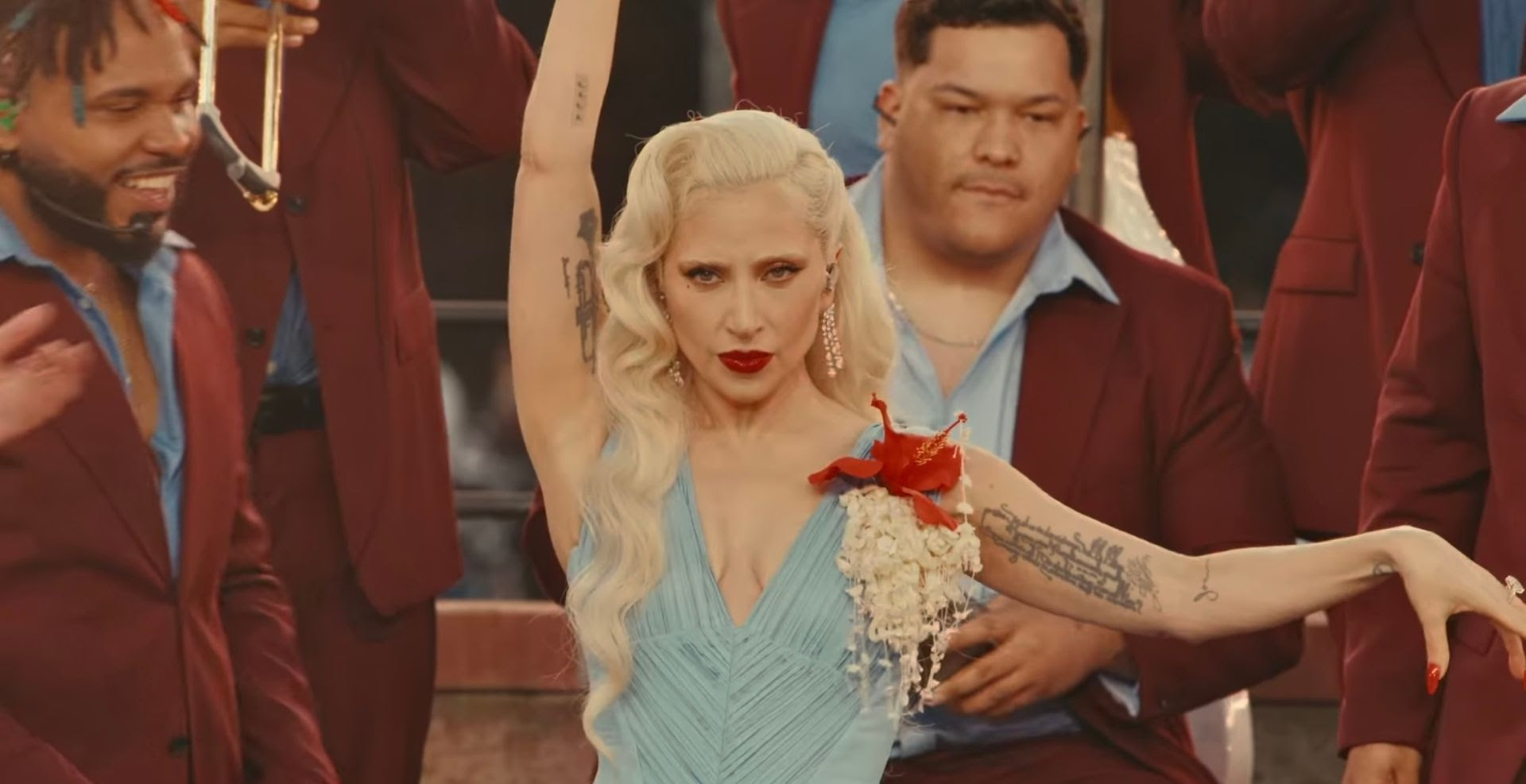
The performance also brought out star power on and around the stage. Billboard and other outlets reported that Lady Gaga and Ricky Martin joined Bad Bunny as on-field guests, and cameras also caught celebrities including Cardi B, Karol G, Pedro Pascal, and Jessica Alba during the broadcast.
Director Hamish Hamilton said the show required constant coordination as everything was happening live, which brings risk and timing pressure.
He also added that Bad Bunny took risks during the performance itself. At one point, the singer climbed a tall utility pole without wearing a harness. “He refused to wear a harness,” Hamilton. “He was like, ‘I don’t need it.’”
Cuddeford mentioned that the safety equipment was available but not used. “There was all safety and rigging and all of that available, obviously, of course, but he didn’t want it,” she said. “He does his stunts, that guy, and he learned it in about three minutes. Straight up that pole.”
The show also included a moment where Bad Bunny appeared to fall through the roof of a small house set on the field.
Cuddeford said that moment depended on precise timing between live action and pre-recorded footage. “The stunt itself, to fall through the roof, wasn’t so crazy, there’s a trap door,” she said. “But it required so much meticulous planning, because we cut straight into the pre-tape.”
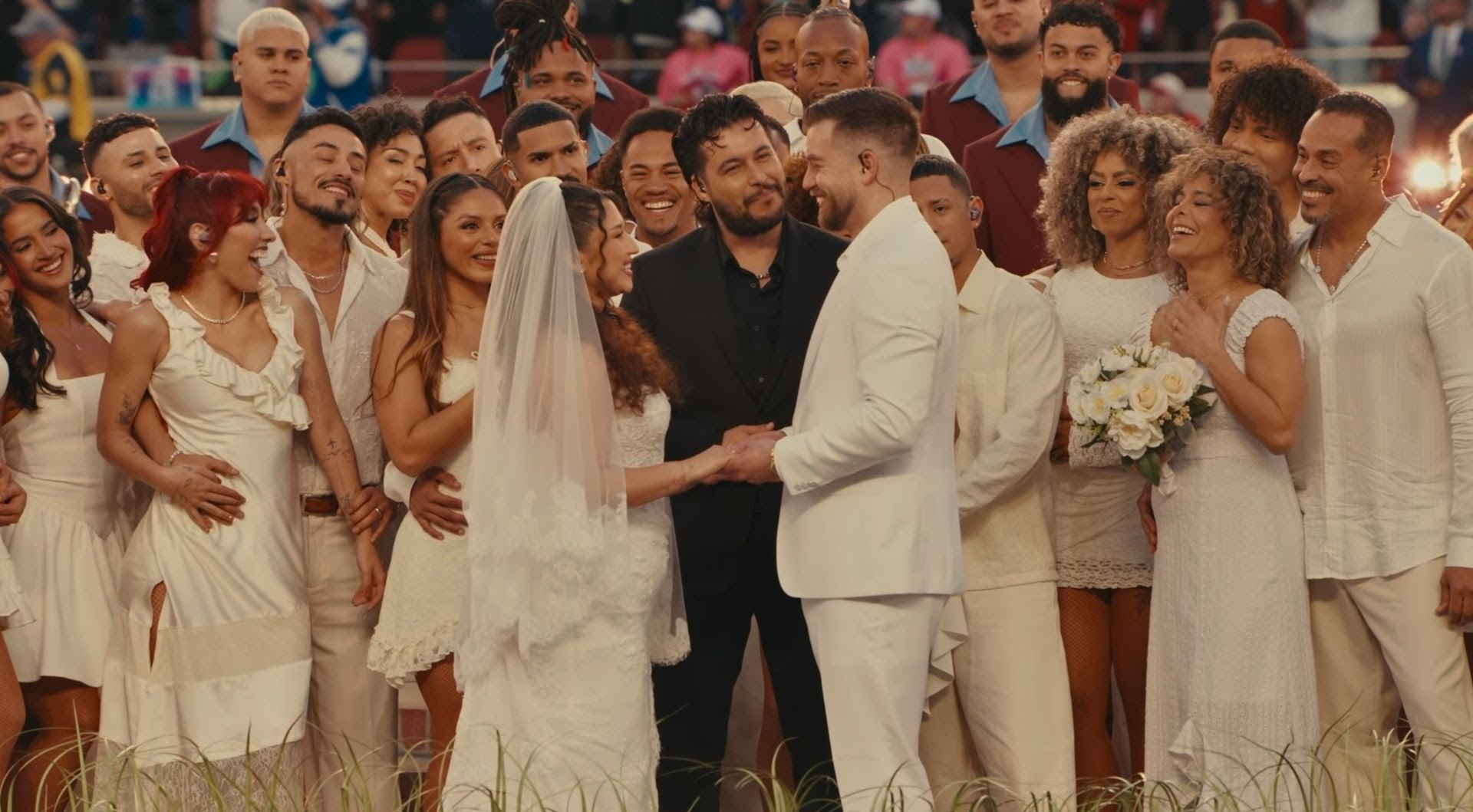
Another moment that drew a lot of attention was the wedding during the halftime performance. Hamilton clarified that the couple mailed Bad Bunny an extra wedding invitation as a long shot.
“An overprinting of wedding invitations led to a series of events where they wound up getting married during Bad Bunny’s performance at the Super Bowl!” Hamilton said.
Moreover, the scene where a child received a Grammy also had a clear purpose, and the idea came directly from Bad Bunny.
“The kid is somebody that we cast,” Cuddeford said. “But the story behind that was Benito’s idea.”
She said the moment reflected his childhood memories. “He’d grown up watching his idols on TV getting awards,” she explained. “This is really representing a younger version of himself, with the hope of him inspiring the kids of today.”
Beyond the major moments, the production also included real people from the community. Producers flew in small business owners, vendors, and workers to appear on stage. Cuddeford said the goal was to show everyday life and culture on the biggest stage. “The performance is celebrating normal people and what it is to be human and love and have joy and really appreciate one another,” she said. “He’s a very authentic person, Benito, and it’s about just being authentic and very real and very human.”
During the broadcast finale, Bad Bunny shouted, “God bless América!” and displayed flags representing countries across North, Central, and South America, closing the performance with a message about unity across the continent. He also held a football reading “Together we are America” before ending with the phrase “Seguimos aquí.”
Cuddeford said the team understood that goal from the start. “People understood the message he wanted to convey,” she said. “That Latino people felt loved, seen, and celebrated, and that people felt joyful.”
